

What are your thoughts about cryptocurrency?
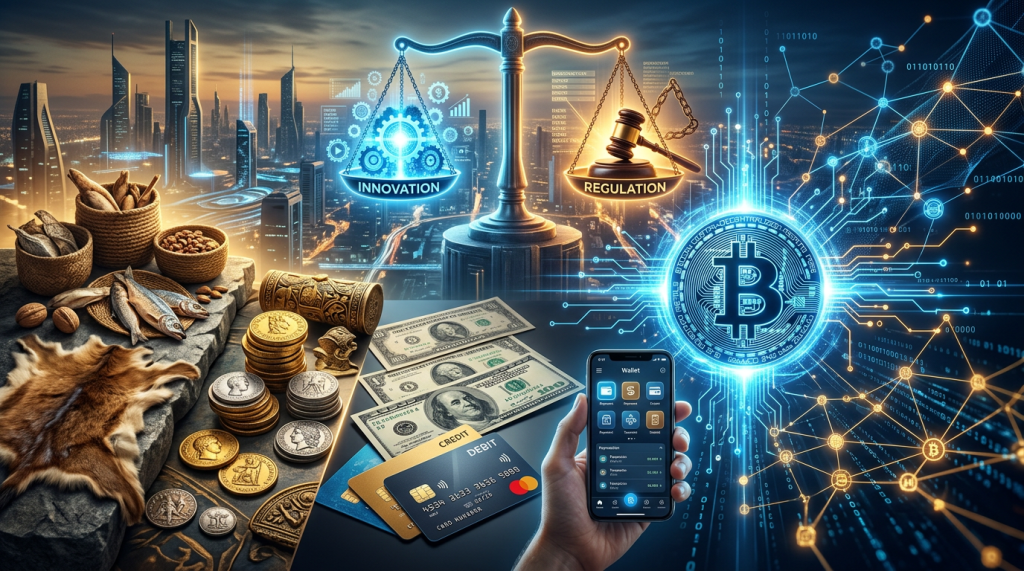
Human beings have been exchanging goods and services since our earliest days as hunter-gatherers. Long before coins, banknotes, or digital payments existed, trade was based on barter. If one tribe had surplus animal hides to survive the winter, they could exchange them for food from another tribe. While barter worked, it was highly inefficient because it required both parties to have exactly what the other wanted at the same time.
Over time, societies realized that commerce needed a more practical medium of exchange. Precious metals such as gold, silver, and bronze gradually became accepted as stores of value, eventually evolving into minted coins. This marked the beginning of what we now recognize as money.
What is fascinating is that these coins had little direct survival value. You cannot eat gold, drink silver, or shelter yourself with a bronze coin. Their value came from something else: collective trust. People agreed that these objects represented value, and that agreement became the foundation of commerce.
Centuries later, those metal coins evolved into paper currency, checks, bonds, stocks, credit cards, and, more recently, digital wallets. None of these forms of money have intrinsic value in the traditional sense. A credit card is merely a piece of plastic. A payment app on a smartphone cannot quench your thirst. Yet both are universally accepted because society recognizes them as legitimate means of exchange.
This leads to what I believe is the most important principle of economics: money is whatever a sufficiently large group of people agrees to use as money.
In fact, societies routinely assign value to things that would have seemed absurd in previous generations. Social media influencers, for example, often exchange visibility, engagement, and online influence for free products, services, meals, or event access. In practice, “likes” and attention have become a form of currency within a particular ecosystem.
From this perspective, cryptocurrencies are not a radical departure from history. They are simply the latest chapter in humanity’s long evolution of exchange systems. Like every form of money before them, cryptocurrencies derive their value from collective acceptance. As long as millions of people around the world are willing to exchange goods, services, or investments using them, they function as a legitimate medium of exchange for that community.
History offers an interesting parallel. Seventy years ago, many people did not understand how a credit card could represent money. Yet convenience and widespread adoption eventually pushed governments and financial institutions to create regulations that integrated credit cards into the global economy. Today, few people question their legitimacy.
Cryptocurrencies may be following a similar path. The technology has already demonstrated that there is demand for decentralized digital assets and borderless transactions. The challenge is not whether cryptocurrencies can exist, but how they can coexist with the legal and financial frameworks that protect society.
In my view, regulation is the missing piece. Without clear oversight, cryptocurrencies can be exploited for money laundering, fraud, illicit trade, and other activities that undermine public safety and trust. However, the existence of bad actors does not invalidate the technology itself, just as criminal use of cash does not invalidate traditional currency.
The future of cryptocurrencies will likely depend less on technology and more on governance. If governments can create balanced regulations that preserve innovation while preventing abuse, cryptocurrencies may ultimately become as ordinary and accepted as credit cards, online banking, or digital wallets are today.
The history of money suggests that society rarely abandons a useful method of exchange. Instead, it regulates it, adapts it, and eventually absorbs it into everyday life.


Leave a Reply